Feeling unproductive even though you’re busy all day? You’re not lazy you’re likely overwhelmed. Most productivity advice today involves complicated systems, endless apps, or waiting for motivation to magically appear. That’s exhausting. The truth is, productivity doesn’t come from doing more or trying harder. It comes from small habits you can repeat even on low-energy days.
This guide focuses on simple daily habits for productivity that work in real life no apps, no pressure, no hype. Just practical routines that help you move forward consistently. These habits are especially helpful if you’re a beginner building consistency for the first time. And these habits help you stay productive, but if your goal is to study without getting burned out effectively, you’ll want to combine them with focused study blocks and active learning techniques.
Why Productivity Doesn’t Come From Motivation
Motivation feels powerful, but it’s unreliable. Some days you wake up energized. Other days, not so much. If your productivity depends on motivation, your results will always be inconsistent.
Habits are different. Habits don’t require you to feel inspired. They work even when you’re tired, stressed, or distracted. That’s why people who appear “disciplined” aren’t constantly motivated they’ve simply built routines that remove decision-making.
Real productivity grows through consistency, not bursts of inspiration. When your actions are automatic, progress happens quietly in the background.
If mornings feel chaotic, productivity becomes harder than it needs to be. Following a simple morning routine removes early decisions and makes these habits easier to stick with throughout the day.
If you want a deeper breakdown of this idea, this guide explains how to 👉 stay focused without motivation and still get meaningful work done.
7 Simple Daily Habits That Actually Work
These habits are intentionally boring and that’s why they work. No tools. No tracking. Just repeatable actions you can do every day.
Start the day with one clear task
Forget long to-do lists. At the start of your day, choose one task that matters most. Write it down or say it out loud. That’s it.
This reduces overwhelm and gives your day direction. Even if nothing else gets done, completing that one task creates momentum and momentum fuels productivity.
Work in short focused sessions
You don’t need hours of deep work. Try 25-30 minutes of focused effort, then stop. Short sessions lower resistance and make starting easier.
When time feels limited, your brain focuses naturally. This habit is especially helpful when you’re procrastinating or mentally drained.
Remove one distraction
Don’t try to eliminate all distractions that’s unrealistic. Just remove one.
Put your phone in another room. Close unnecessary tabs. Turn off one notification. Small changes create big improvements when done consistently.
Productivity often increases more by subtraction than addition.
Stop multitasking
Multitasking feels productive, but it destroys focus. Switching between tasks drains mental energy and increases mistakes.
Train yourself to do one thing at a time even for a few minutes. This habit alone can dramatically improve the quality and speed of your work.
Plan tomorrow today
At the end of the day, take two minutes to decide what tomorrow’s main task will be. This simple habit reduces morning stress and prevents decision fatigue.
When you start the day knowing what matters, you’re far less likely to waste time figuring out where to begin.
Take breaks properly
Breaks aren’t optional they’re part of productivity. But scrolling endlessly doesn’t refresh your brain.
Good breaks involve movement, rest, or mental distance: a short walk, stretching, looking outside, or sitting quietly. Even five minutes can reset your focus.
End the day early
Productivity isn’t about squeezing every minute. It’s about sustainability.
Choose a clear stopping point for work. Ending your day intentionally helps your brain recover and makes it easier to start again tomorrow. Rest is a productivity habit, not a reward. And for students looking for a structured daily plan that avoids burnout, check out my detailed guide on the daily routine for students without burnout.
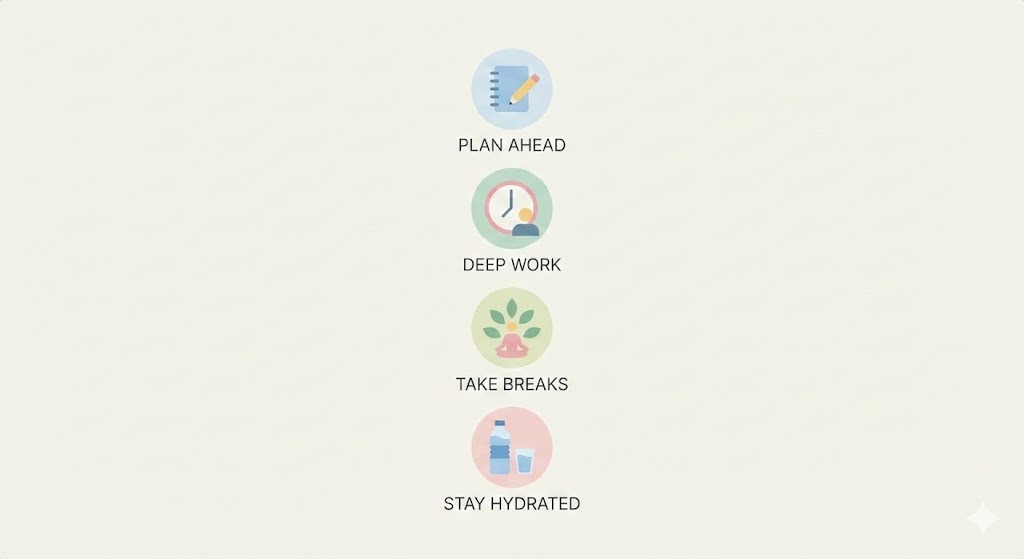
Productivity Habits for Students & Beginners
If you’re a student or just starting out, these productivity habits for beginners focus on simplicity over perfection. You don’t need apps, planners, or paid tools to build effective routines.
Focus on basics:
- One task at a time
- Short work sessions
- Clear start and stop times
These habits fit around classes, part-time jobs, family responsibilities, and unpredictable schedules. They’re flexible enough to adapt to real life, not ideal conditions.
Consistency beats intensity. Even small daily actions compound into better focus, stronger motivation, and lasting results.
Common Productivity Mistakes to Avoid
Many people struggle not because they lack effort but because they follow unhelpful advice.
Overplanning
Spending more time planning than doing creates the illusion of progress. Keep plans simple and actionable.
Waiting to “feel motivated”
Motivation follows action, not the other way around. Start small, even when you don’t feel ready.
Copying other people’s routines blindly
What works for someone else may not fit your energy, schedule, or responsibilities. Build habits around your life not an idealized version of it.
FAQs
Q1: How can I be productive without motivation?
By relying on habits instead of feelings. Simple routines reduce the need for motivation and make action automatic.
Q2: How long does it take to build a productivity habit?
Most habits begin to feel natural after 2-4 weeks of consistent repetition, even if progress feels slow at first.
Q3: Are daily habits better than productivity apps?
Yes. Apps can support habits, but habits work anywhere without tools, updates, or distractions.
Keep Building Your Productivity Foundation
Simple daily habits for productivity create a strong base for focus, motivation, and long-term consistency. When you stop chasing motivation and start building routines, productivity becomes calmer and more sustainable.
To explore more practical guides:
- Visit our HomePage
- Browse the Blog
- Read our guide on how to stay focused without Motivation